Anúncios
Buying a home is a big dream for many service members. You’ve served your country with honor. Now, you can use special VA loan benefits to build your future. You can buy a property without a down payment.
Using a zero down payment option lets you keep your savings. This is a key part of the va-home-loan program. It helps veterans across the U.S. Understanding the path forward is key to feeling confident in the mortgage world.
Anúncios
In this guide, we’ll show you the steps to get approved. By following these tips, you can easily move from active duty or veteran status to a new home.
Key Takeaways
- The program offers a unique opportunity to purchase property without an upfront cash investment.
- Veterans can preserve their personal savings by utilizing the zero down payment feature.
- Eligibility requirements are designed to reward your service and dedication to the country.
- Navigating the approval process requires a clear understanding of current mortgage standards.
- Strategic planning helps you maximize your military housing entitlements effectively.
Understanding the VA Home Loan Eligibility Requirements
To get a home loan with no down payment, you need to meet certain standards from the Department of Veterans Affairs. Before you look for houses, check if you qualify for VA loan eligibility. This step helps you use your benefits wisely.
Anúncios

Determining Your Military Service Status
The program is for veterans, active-duty members, and some National Guard or Reserves. Your military service requirements depend on when and how long you served. You usually need to have served for a certain amount of time to qualify.
If you’re still in service, you might qualify after a short time of active duty. Veterans who served in wartime or peacetime have different rules. Make sure you know your status to meet the program’s needs.
Reviewing Certificate of Eligibility (COE) Guidelines
Your Certificate of Eligibility proves you’re eligible for the program. It tells lenders you’ve met the basic service needs. Without it, lenders can’t confirm your eligibility.
You can get this document from the VA’s online portal or through your lender. Many lenders can check your information quickly. Getting this document early makes buying a home easier.
Assessing Your Credit Score and Financial History
Even though the government backs the loan, lenders check your financial health. They look at your credit score requirements to see if you can handle mortgage payments. A good credit score can get you better loan terms.
Lenders also check your debt-to-income ratio to see how much you can borrow. They want to make sure you can afford your new home and other debts. Keeping your finances in good shape shows you’re ready for a mortgage.
Steps to Secure Your VA Home Loan Approval
Starting early in your home buying process can make things easier. Organize your finances and know what you need. This helps when you apply for a va-home-loan.
Gathering Necessary Documentation for Your Application
Getting your financial documentation right is key. Start with recent pay stubs, W-2 forms, and tax returns from the last two years. Being proactive with these documents helps avoid delays.
Also, collect your bank statements and records of assets or debts. Having these ready lets your lender check your finances fast. Organization is key to keep your application moving smoothly.
Selecting a VA-Approved Lender
Not all lenders are the same when it comes to government-backed loans. Choosing a VA-approved lender is crucial. They know the program’s details and can explain the benefits to you.
Find a lender who is clear and values your time. A good lender will help you understand the process. Your choice of lender can greatly affect your success.
Getting Pre-Qualified Versus Pre-Approved
Many people mix up pre-qualification and pre-approval. Pre-qualification is a rough estimate based on what you say. But, a VA loan pre-approval is a detailed check by a lender.
Why Pre-Approval Strengthens Your Offer
A pre-approval letter shows sellers you’re serious. It means a lender has checked your finances. In a competitive market, this gives you an edge over others.
Managing Debt-to-Income Ratios During the Process
Your debt-to-income ratio is important for loan eligibility. It shows how much of your income goes to debt. Lenders check this to see if you can handle a mortgage.
Avoid big purchases or new credit while applying for a loan. These can hurt your ratio and risk approval. Maintaining financial stability is crucial for a smooth closing.
Navigating the Property Appraisal and Underwriting Process
You’re now moving into a critical stage. This is where you ensure your future home is safe and meets federal standards. It’s all about protecting your investment and following government guidelines.
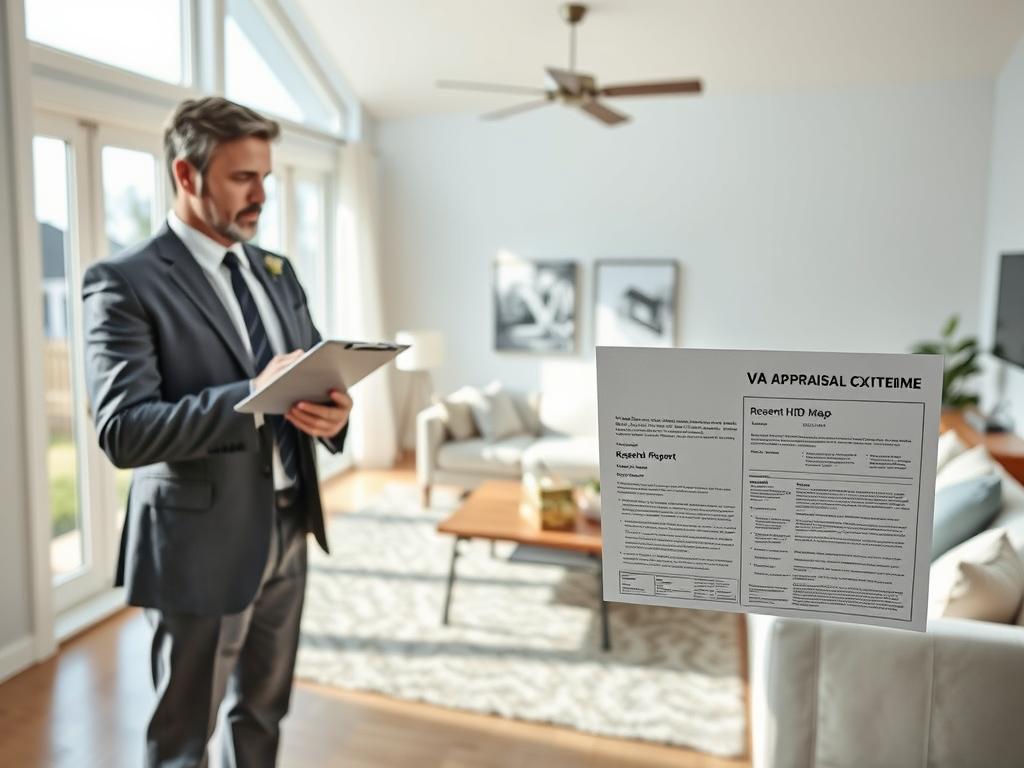
Understanding the VA Appraisal Standards
A VA appraisal is different from a home inspection. Inspectors look for defects to save your money. Appraisers, on the other hand, check the home’s value and condition for the government’s sake.
The appraiser will check if the home is a good investment. They also make sure it meets property safety standards for a government-backed loan.
Minimum Property Requirements for Safety and Habitability
To get financing, your home must meet strict property requirements. These rules ensure your home is safe, clean, and sturdy for you and your family.
- The home must have adequate heating and cooling systems.
- All electrical and plumbing systems must be in good working order.
- The roof must be in good condition and free of major leaks.
- The property must be free of hazards like lead-based paint or pest infestations.
Working Through the Underwriting Phase
After the appraisal, your file goes to VA underwriting. Here, an underwriter checks your finances to see if you qualify for the loan.
They review your income, assets, and credit history. This step makes sure you can handle your mortgage payments.
Addressing Potential Hurdles in the Approval Timeline
Issues can sometimes delay your closing. Being proactive helps keep your timeline on track and reduces stress.
- Respond to requests for additional documents from your lender immediately.
- Address any repair items identified during the VA appraisal quickly.
- Maintain your current financial status by avoiding new debt or large purchases.
- Stay in close contact with your loan officer to monitor the VA underwriting progress.
By staying organized and meeting all property requirements, you can overcome these challenges. Good communication is key for a smooth transition to homeownership.
Maximizing Your Zero Down Payment Benefits
VA loans offer unique features that can save you a lot of money. By choosing a zero down payment option, you keep your money for other important goals. These VA loan benefits give veterans a big advantage when buying a home.
Calculating Your Total Savings Without a Down Payment
Not having a down payment means you keep your money safe. This money is crucial for home repairs, emergencies, or paying off debt. Here’s how your savings can grow:
- More money for home repairs or upgrades right away.
- Chance to invest in retirement or savings accounts.
- Less financial stress when you first own a home.
Understanding the VA Funding Fee and Exemption Criteria
The VA funding fee is a cost that helps the program grow. But, not everyone has to pay it. You might get a VA loan exemption if you meet certain VA rules.
Veterans with service-connected disabilities often don’t have to pay this fee. Always check your status with your lender early. This can save you a lot of money at closing.
Budgeting for Closing Costs and Prepaid Items
Even with no down payment, you still need to plan for closing costs and prepaid items. These costs include fees for the loan, title insurance, and initial payments for taxes and insurance. Planning ahead helps avoid unexpected expenses.
“Proper financial preparation is the cornerstone of a successful home purchase, ensuring that you remain comfortable in your new home from day one.”
To handle these costs well, ask for a Loan Estimate from your lender early. This document shows your expected costs. By budgeting for these, you make the move into your new home smoother.
Conclusion
Your journey to owning a home is filled with special benefits for those who served. A VA home loan lets you start in the real estate market without needing a lot of cash upfront. This zero down payment option is a great way to build wealth and stability for your family.
Success in this journey depends on your commitment to financial health and keeping your documents in order. A strong credit score and up-to-date records make the mortgage approval process easier. These steps help protect your interests from start to finish.
You have a big opportunity because of your service to the country. Contact a trusted lender today to start your application. Taking action now means you’re in charge of your housing future. Your dream of owning a home is closer than you think, with these special resources.